A CAO Application 2027 is simply your application for a place starting in 2027, made through South Africa's Central Applications Office. Here you will find how the 2027 cycle works, who should use CAO, what to get ready before you start, how the form, the payment and the document upload fit together, and where to look up the dates and fees for your own programme choices.
Keep the current 2027 Entry Handbook open next to this page. It is the one place that lists, programme by programme, the closing dates, minimum points, entry requirements, entry terms and durations. Nothing here replaces it, and you will not find a fee or a closing date quoted here unless it was confirmed on an official CAO page at the time of writing.
What the 2027 Cycle Means
When CAO and the universities talk about 2027 entry, they mean study that begins in the 2027 academic year. That covers two different starts: first-semester entry, which CAO's Programmes page calls entry term 1 and puts between January and February, and second-semester entry, called entry term 3, between July and August. Check which entry term your programme uses, because a first-semester programme and a second-semester programme are not the same application.
For this cycle, the 2027 Entry Handbook is the document to work from. CAO's Learner Guide for 2027 Entry says the Handbook is on the CAO website and reached schools from 1 April. Stick to the 2027 edition, not an older one, since programme lists, requirements and closing dates shift every year. If a programme shows up in an old Handbook but not in the 2027 one, look at the current programme list on cao.ac.za before you count on it.
One mix-up to clear up early: this CAO is the South African Central Applications Office in KwaZulu-Natal, not the Central Applications Office in Ireland. Points, dates and rules from Ireland have no bearing on a South African CAO application.
Who Applies Through CAO for 2027
Most CAO applicants are first-time undergraduates heading for one of the four public CAO universities: the University of KwaZulu-Natal (UKZN), Durban University of Technology (DUT), Mangosuthu University of Technology (MUT) and the University of Zululand (UNIZULU). If you are in Grade 12 in the year before 2027 entry, or you finished school and have never studied at one of those institutions, CAO is normally how you apply for undergraduate study there.
The same normally goes if you are transferring into UKZN, DUT, MUT or UNIZULU for undergraduate study. If you are already registered at one of them, though, read that institution's own instructions first, because students who are continuing do not always go through CAO.
Postgraduate study is less straightforward. CAO's Programmes page advises you to consult the institution about courses that do not appear on the CAO website or in the Handbook. So before you open a postgraduate CAO form, ask the institution whether that programme runs through CAO or straight through them. Starting down the wrong route can set you back by weeks.
Private colleges show up in the CAO system too. In the Handbook you will spot university and university of technology programmes under a blue heading, while private college programmes sit under an orange heading. That does not mean every private college in South Africa is part of CAO, so confirm yours in the current Handbook and programme list.
How a 2027 Application Fits Together
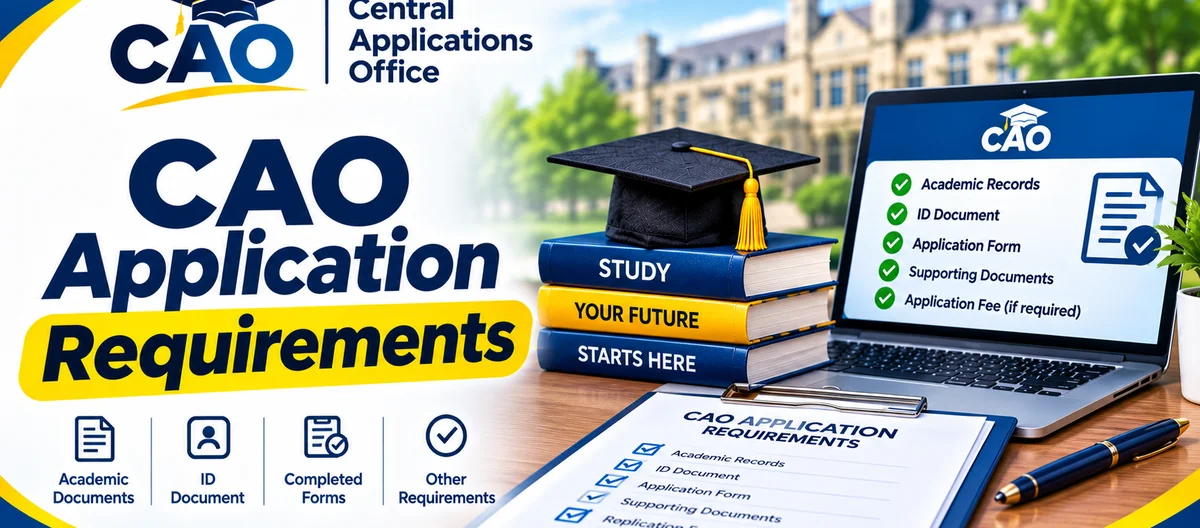
Think of a complete CAO application as three jobs. You need all three done, and if one is missing, processing can stall.
First comes the online form. Head to cao.ac.za, click Apply, type in your South African ID number or passport number, fill in your personal, school and programme details, and click Process My Application to submit. Just working through the screens is not enough: until you process the application, it has not been submitted.
Second comes the administration fee. CAO's Learner Guide gives you two ways to pay: online, or at an EasyPay outlet such as Shoprite, Checkers or Pick n Pay. Paying online happens through the Payments option on the CAO website. At an EasyPay outlet, use the unique EasyPay number on your application as the reference. Once payment is confirmed, the Guide says your application will be processed. What you actually pay depends on what cao.ac.za shows at the payment step for your application, including your applicant category and when your payment reaches CAO. You will notice no fee amount is quoted here on purpose, because no figure was confirmed on an official CAO page at the time of writing. Always check the amount shown for your own application before you pay, and hold on to your proof of payment.
Third come your supporting documents. Once you have submitted, upload what is required through Upload My Documents on the CAO homepage, following the login and upload steps on screen. Uploading happens on the CAO website itself, so posting documents or sending them by email will not finish your application.
With all three parts finished, CAO passes your application on to the institutions you picked. From there, each institution decides for itself. Hitting a published minimum gets your application considered; it does not secure a place, because available places, ranking and programme-specific selection all come into it as well.
Dates for 2027: What to Check, and Why They Differ
New applicants often want one closing date for CAO 2027. There simply is not one date that fits every programme, which is why you will not find one given here.
Every programme entry, in the Handbook and on the programme list, carries its own closing date. Plenty of programmes close early so there is time for interviews and assessment tests. CAO's Programmes page cautions that anything arriving after a closing date is treated as late, that each institution handles late applications in its own way, and that UKZN Health Science programmes will not look at applications received after the closing date at all. And once a programme has closed early, it does not reopen just because the general system is still taking applications for other programmes.
Watch out for a second trap: a programme closing date and an administration fee deadline are not the same thing. A programme can close on its own date while the fee deadline for other programmes that are still open falls later. Never use a fee deadline in place of a programme closing date. Look up both, for your exact programme and campus, in the Handbook.
Wherever you can, apply early. An early application leaves you room to sort out a payment snag, upload a clearer document, or fix a small detail before a programme closes. Submitting late, where that is even possible, rests on whether space is left and on the institution's own rules for late applications.

Preparing for 2027: Results, Requirements and Choices
Your school results sit at the heart of your application. If you are in Grade 12, your final Grade 11 results plus any Grade 12 results you have so far are normally what counts at first, with your final matric results taken into account later. If you have already left school, your highest qualification is the key document. Copy results exactly as they appear on your reports, and never guess a mark that has not been issued yet.
Every programme sets its own minimum points and minimum entry requirements. CAO's Programmes page puts it plainly: minimum points are the lowest number of points you can attain to apply for a programme, and the points you need can vary with the school leaving examination you wrote. Work out your total from your latest examination results following the Handbook's method. Then check the requirements for your exact programme and campus, since they can differ from one programme to another, from one campus to another, and from one examination type to another.
Put your programme choices in the order you truly want them. A few programmes favour applicants who placed them first or second. Padding your list with programmes you have no real wish to study will not help you, however long it looks. Spend time in the Handbook's career direction sections, and for each option check the level of study, whether degree, diploma, certificate or shorter course study, along with the duration and the entry term, before you settle your list.
Documents for 2027 Applicants
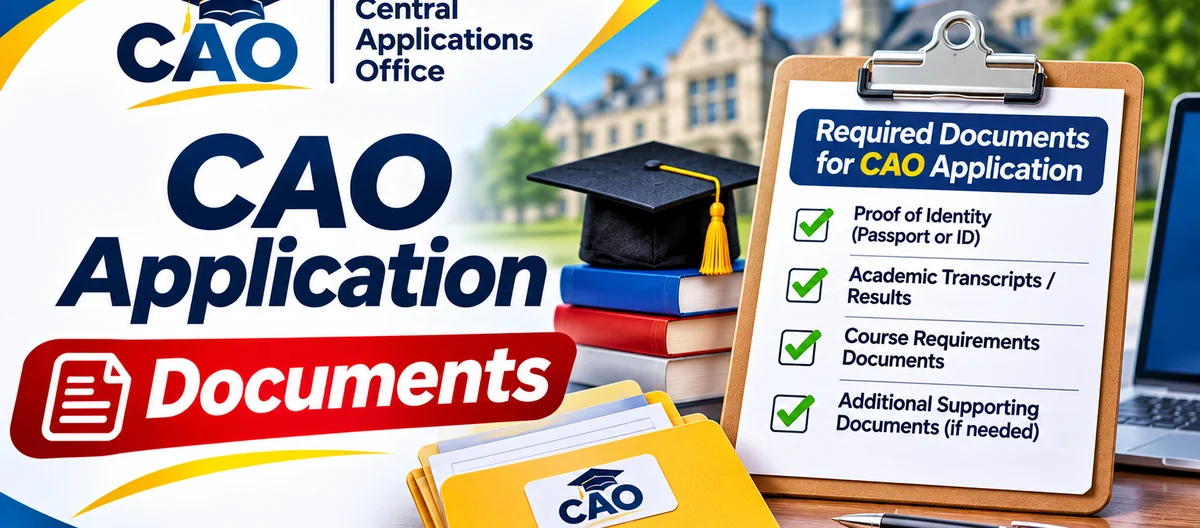
What you need to upload depends on the kind of applicant you are. Grade 12 learners, school leavers, transfer students, mature applicants and international applicants do not all hand in the same set. As a starting point, most people need an identity document, school results or their highest qualification, and proof of payment. Your programme or applicant type may call for more, like an academic record if you have studied at tertiary level before, or an evaluation if your qualification comes from outside South Africa.
Only use the official upload route, and make sure every document is clear, complete and filed under the right category. A blurry or wrongly categorised document can slow things down even though you did upload something. After uploading, keep an eye on your application progress and answer quickly if CAO or an institution asks for another document. You might see a status asking you to Please Supply Academic Record or Please Supply USAf/SAQA Evaluation. These are official Handbook status terms, and they are literal: send in the named document through the official route.
Checking Progress and Offers in the 2027 Cycle
Once you have submitted, track your progress with Check My Application on the CAO homepage. That checker asks for just one identifier: your CAO number, your South African ID number, or your passport number. No password is involved in that flow. Keep it separate in your mind from the applicant login you use for Upload My Documents and for updating your details, which does ask for a password alongside your CAO number or ID or passport number.
Among the status terms you could see are Waiting for a Decision, Awaiting Results, Conditional Offer, Firm Offer, Short-listed / Standby / Wait-listed, and Regret Unsuccessful. You will hear students say pending when they mean Waiting for a Decision, and provisionally accepted when they mean Conditional Offer. Those are everyday student words, not the official labels. Always go by the official term, read any conditions tied to an offer, and follow the institution's acceptance and registration instructions by the date stated in the offer.
Funding, Accommodation and Registration Are Separate
Finally, keep the boundaries clear: a CAO application for 2027 is not a funding application, not an accommodation application and not a registration. CAO deals with applications. NSFAS deals with funding, and that needs its own separate NSFAS application. Accommodation and registration sit with the institution once you have an offer, on that institution's own process and dates. So do not hold back your CAO application while you wait on a funding decision, and do not take a CAO offer to mean funding or accommodation is already approved.