So, what paperwork does CAO actually want from you? The honest answer is: it depends on who you are. Someone still in Grade 12, someone who finished school years ago, someone moving from another institution, a mature applicant and an international applicant will not all be asked for the same set. Below you will find the documents nearly everyone needs, the extras that only apply in certain cases, and how to get your uploads right so CAO can work with them straight away.
First, the golden rule: your documents go up on the CAO website. CAO's Learner Guide says that once your application is in, you upload what is required through Upload My Documents on the CAO homepage. Posting a bundle or emailing scans will not complete your application.
The Documents Most Applicants Need
Start with what almost every applicant needs, then bolt on the extras for your own situation.
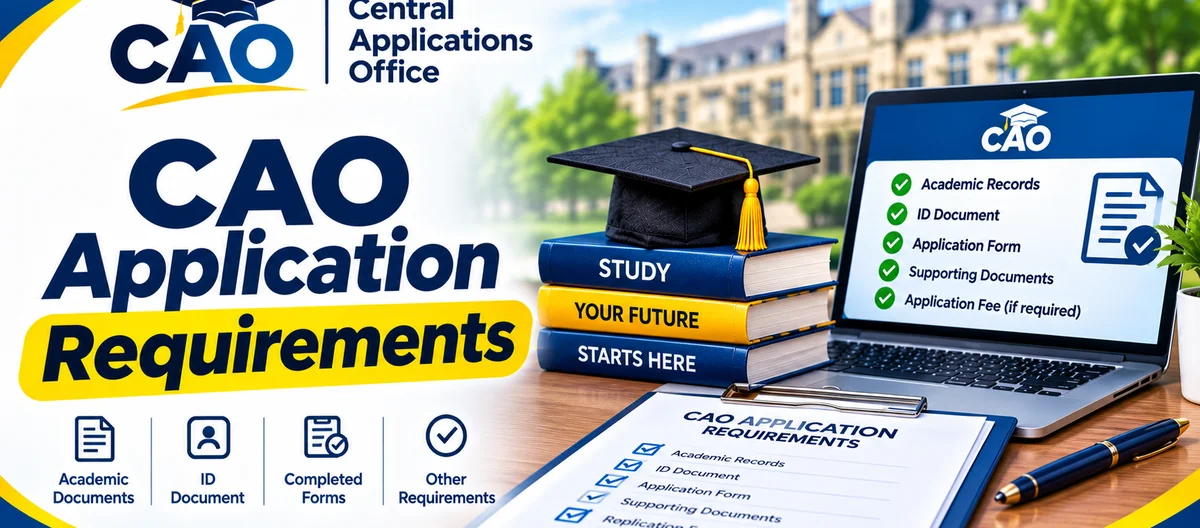
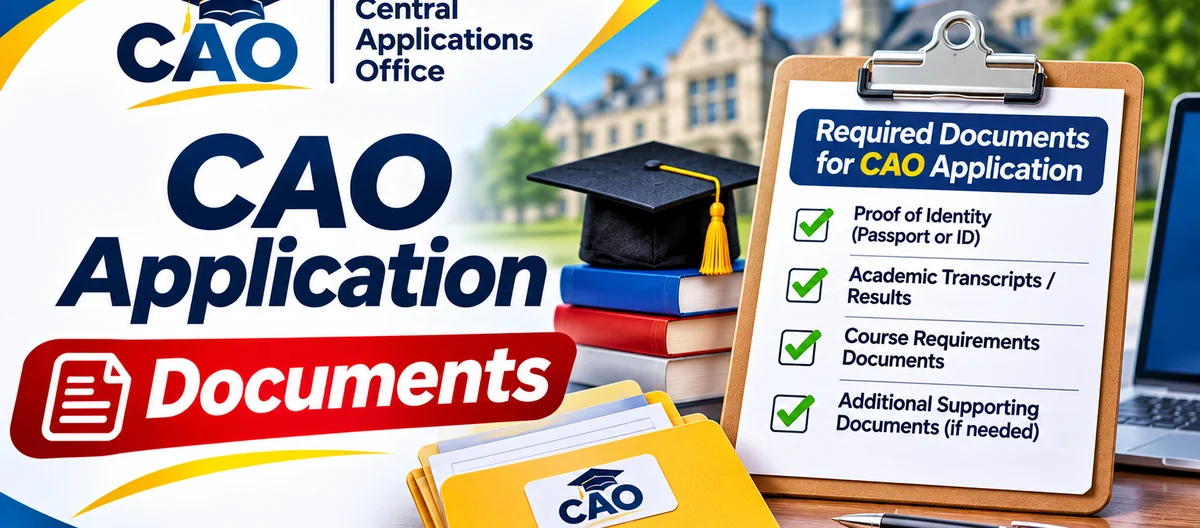
First up, proof of who you are. That usually means a certified copy of your South African ID document, or a valid passport if you are applying from outside South Africa. The number on that document has to match the ID or passport number you typed into your application form. When those two do not line up, delays are almost guaranteed, and it is one of the most common hold-ups there is.
Next, your school results or your highest qualification. Still in Grade 12? Then it is normally your final Grade 11 report, plus any Grade 12 June or trial results you have in hand. Already finished school? Then it is your highest qualification, like your matric certificate or statement of results. Type your results into the form exactly as they read on the document, and upload a clear copy of the document itself.
Third, proof that you paid the administration fee. The Learner Guide covers paying online or at an EasyPay outlet, and for EasyPay payments your unique EasyPay number is the reference to use. Keep that proof safe, and upload it wherever the application asks, so CAO can confirm the payment landed against your application.
Identity, school results or highest qualification, and proof of payment: that trio is where most applicants start. On its own, though, it is not the full list for every kind of applicant. Your own checklist on cao.ac.za, and the Handbook entries for your programmes, might ask for more.
Documents by Applicant Type
Grade 12 learners
If you are in Grade 12, get your final Grade 11 report ready when you apply, and add your Grade 12 June and trial results as they arrive. One field deserves a special mention: the application instructions for the results section make entering your Life Orientation result compulsory, so never leave that one blank when the system asks for it. Your final matric results come into play once they are issued. Before that, your status may read Awaiting Results, which simply means a decision is waiting on results, not that your application has failed.
School leavers
If you left school already, upload the highest qualification you achieved instead of leaning only on a Grade 11 report. And if your certificate has not arrived yet, do what your application itself instructs for that case, whether that is a statement of results or another interim document it accepts, and swap it for the certificate when it is issued if CAO or the institution asks you to.
Applicants with previous tertiary study
Studied at a tertiary institution before, finished or not? Then you may be asked for an academic record from that institution. Until it arrives through the official upload route, your CAO status may read Please Supply Academic Record. Be upfront about all previous tertiary study in your application history. Hoping it goes unnoticed is a bad plan: institutions look at your full study history, and gaps in it tend to cause trouble down the line.
Mature applicants
Mature applicants sometimes need one more thing, an exemption or evaluation document, and it varies with the institution and programme. Where it applies, Handbook programme entries point to a USAf mature age exemption. No single document list fits every mature applicant, which is why this page does not try to give one. Read your programme entry, and check with CAO or the institution before you submit, so the document you upload first time is the right one.
International applicants
International applicants generally need a valid passport or identity document, their final school results, and, where it applies to them, an evaluation of a foreign qualification plus proof of English proficiency. Anything issued in a language other than English might have to come with a sworn English translation. The international applicants guide on this site goes into those requirements in more depth. A South African checklist will not automatically cover an international case, and a document in another language should never just be sent in without first checking whether a translation is needed.
Documents Requested for a Specific Programme
Then there are the extras tied to one programme in particular. A design or art programme might ask for a portfolio, another might want evidence for an audition, and a third might need a document connected to an interview or assessment test. Whatever the institution instructs, and whatever the Handbook entry says, is what counts. Go through the entry for every programme you pick, not just your first choice, because your second or third choice could ask for something different.
A status message naming a document works the same way. If you see Please Supply USAf/SAQA Evaluation, that is an official Handbook status term, and it is literal: send that evaluation in through the official upload route, and do it promptly. A status request like that is not a friendly hint. It puts further consideration on hold until the document is received.
How to Prepare Documents for Upload
A little care before you upload saves most headaches. Run through these checks for each document:
- You have picked the right document for the category you selected. Choose the wrong document type and your file may never be matched to the requirement, even though you did upload something.
- The whole document can be seen. No edge chopped off, no page left out, and both sides included wherever a document carries information on both sides.
- The writing is sharp enough to read on a phone or a computer screen. A dim, blurry photo does not count as a clear copy.
- The file is in a format and size the upload page accepts. If the page turns a file away, read the format and size note on that page instead of uploading the same file over and over.
- The name on the document lines up with the name and identity number on your application. If your name changed, or a document spells it differently, be ready to explain that through the official route and to back it up with supporting evidence if you are asked.
For identity and qualification documents, certified copies are normally what is required. A certified copy is a copy an authorised person, such as a commissioner of oaths, has certified as a true copy of the original. Where a certified copy is asked for, do not send an uncertified photo of the original, and never upload someone else's document. Look after your originals too, because an institution may want to see them when you register.
When to Upload, and What Happens If You Do Not
Timing matters as well. The Learner Guide puts upload after submission: submit, pay, then upload through Upload My Documents. In real life, upload as soon as you can after submitting rather than drifting towards a programme closing date. Normal processing can get going once you have submitted, paid, and uploaded everything required. Leave any piece out and processing may stall.
Sometimes a document genuinely is not ready yet, because a result has not been issued, for example. Then follow whatever your application says for that document type, and upload it the moment it becomes available. What you should not do is upload a placeholder that is not the required document. That tends to create more confusion than leaving the requirement visibly outstanding and explaining your position to CAO if you need to.